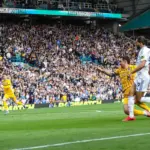
The Leeds United Champions League story is short, but it is the most vivid chapter in the club’s modern history. One campaign, 2000/01, and a run all the way to the semi-finals with a squad whose average age would have embarrassed most academies. A quarter of a century on, it is still the benchmark Elland Road measures European nights against.
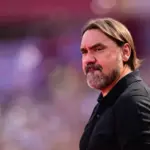
With Daniel Farke’s side back in the Premier League and talk of European qualification never far away, here is the full picture: how Leeds got there, what actually happened, and why it ended so abruptly.
How Leeds United qualified for the Champions League
Leeds finished third in the 1999/2000 Premier League under David O’Leary, a season in which the manager leaned harder on homegrown players than any of his peers dared to. Third place at the time meant a qualifying round rather than a guaranteed place in the group stage, and Leeds came through a two-legged tie against 1860 Munich to reach the competition proper.
It was the club’s first involvement at that level since the old European Cup, and it arrived with a squad still learning what it was.
Barcelona, Milan and the group stage that made them believe
The draw was brutal: Barcelona, AC Milan and Besiktas. The opening night was worse. Leeds were beaten 4-0 at the Camp Nou and the obituaries were written before the campaign had properly begun.
What followed remains the most improbable stretch of football Elland Road has staged in the modern era. Leeds beat AC Milan 1-0 at home, Lee Bowyer’s late strike squirming beyond Dida. They thrashed Besiktas 6-0 under the floodlights. And then, needing a result at the San Siro to go through, Dominic Matteo rose to head Leeds level in a 1-1 draw that supporters of a certain age still talk about within a hundred yards of the ground.
Leeds progressed to the second group phase, which in that era sat between the first groups and the quarter-finals. There they were paired with Real Madrid, Lazio and Anderlecht — and beat Real Madrid 3-2 at Elland Road, one of the loudest nights the old ground has known.
The quarter-final and the semi-final
Deportivo La Coruna were the quarter-final opponents, and Leeds settled the tie at home. A 3-0 first-leg win in Yorkshire gave them enough of a cushion to survive a 2-0 defeat in Galicia and go through 3-2 on aggregate.
The semi-final was Valencia. Leeds could not break them down at Elland Road in a 0-0 draw, and the second leg in Spain was chastening: a 3-0 defeat that ended the run. Valencia went on to lose the final to Bayern Munich on penalties.
By then O’Leary’s side had been assembled at real cost. Rio Ferdinand had arrived from West Ham United mid-season for a fee that made him the most expensive defender in British football at the time, joining a spine of Nigel Martyn, Lucas Radebe, Matteo, Olivier Dacourt, David Batty and Bowyer — who, remarkably for a midfielder, finished as the club’s leading scorer in the competition. Harry Kewell, Alan Smith, Mark Viduka, Ian Harte and Eirik Bakke supplied the rest.
Why the Leeds United Champions League run still matters
It matters because of what came next. Leeds finished fourth in 2000/01 and missed out on a return. Fifth the following season closed the door again, and the borrowing that had underwritten the squad came due. Players were sold, O’Leary left, and by 2004 Leeds were relegated from the Premier League. It took until 2020 to come back.
So 2001 is not simply nostalgia. It is the reference point for every conversation about how quickly a Leeds side can rise and how quickly the bill arrives. O’Leary himself returned to the theme this week, telling the Yorkshire Evening Post that the club “must turn silver into gold to enjoy transfer success” — the words of a manager who knows exactly what recruitment can build and what it can cost.
Leeds United’s wider European record
Leeds’ European history did not begin in 2000. The club reached the European Cup final in 1975, losing 2-0 to Bayern Munich in Paris in a match still disputed in West Yorkshire, and had reached the semi-finals in 1970 under Don Revie. Leeds also won the Inter-Cities Fairs Cup, forerunner to the UEFA Cup and Europa League, twice.
The 2000/01 semi-final remains, however, the club’s most recent involvement in the Champions League. Leeds have not qualified since.
Could Leeds United return to the Champions League?
Not soon, on any honest reading. Leeds are in their second successive Premier League season after promotion in 2024/25 and a 14th-place finish last term, and the immediate priority is establishing themselves rather than chasing Europe. Farke has been pointed about that himself.
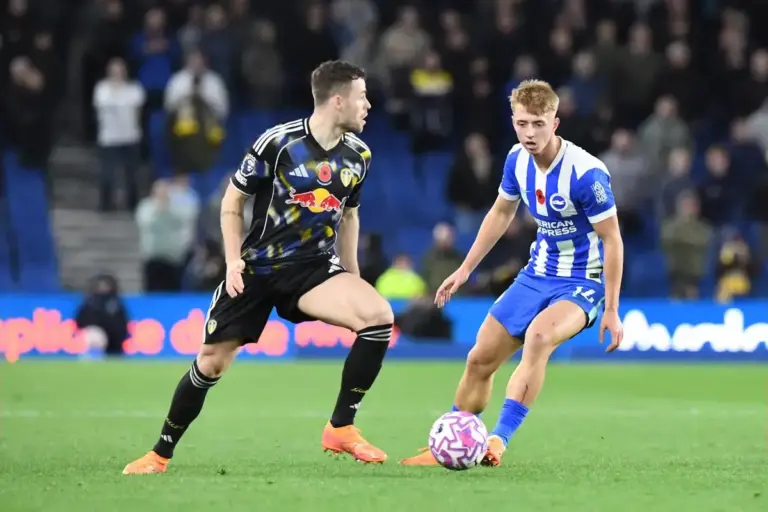
What has changed is the scale of ambition around the club. Leeds spent heavily this summer — James Trafford, Tarik Muharemovic, Nico Elvedi and Harry Wilson all arrived — and started 2026/27 with two wins at Nottingham Forest in two competitions without conceding a goal. Our guide to the confirmed Leeds United squad numbers for 2026/27 sets out the full picture, and the predicted XI to face Brentford shows how Farke is likely to line up at Elland Road.
Champions League nights are a long way off. But for anyone who was at Elland Road for Milan, Besiktas or Real Madrid, the point of 2001 was always that Leeds got there faster than anybody expected.