The Leeds United academy has been one of the most productive in English football for the better part of six decades, and the list of names it has sent out into the game is genuinely startling: European Cup finalists, league champions, England internationals and, more recently, a steady stream of players sold on for serious money. Here is the story of Thorp Arch and the best players the system has produced.
What is Thorp Arch?
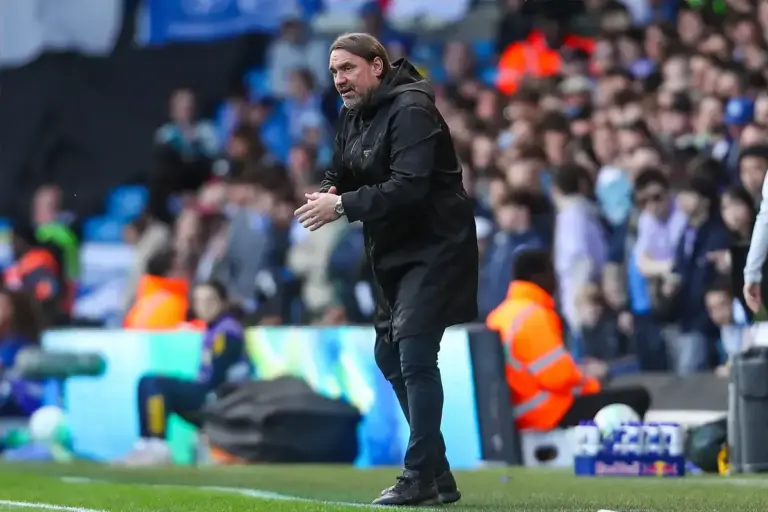
Thorp Arch is Leeds United’s training base and academy home, a site near Wetherby around 15 miles north-east of Elland Road. The club has trained there since the 1990s, and it houses everything from the first team’s daily work under Daniel Farke to the youngest age groups in the development pathway.
The ground itself has been through a familiar Leeds story of sale and recovery. It was sold off during the club’s financial collapse in the mid-2000s and later bought back, in much the same way the Elland Road freehold was recovered. Under 49ers Enterprises the academy has remained a priority rather than a cost line, which matters in an era of Premier League profitability and sustainability rules where a homegrown sale is close to pure profit in the accounts.
The Revie generation: where it started
The great side of the late 1960s and early 1970s was not bought. It was largely grown.
Billy Bremner arrived from Stirling as a 15-year-old and made his debut at 17, going on to captain the club through every trophy of the Don Revie era and to be voted Leeds United’s greatest ever player. Norman Hunter came through the same youth set-up and became the first winner of the PFA Players’ Player of the Year award in 1974. Paul Madeley, a Leeds lad from Beeston, played well over 700 games and in virtually every outfield position without ever asking for a transfer.
Eddie Gray, spotted as a schoolboy in Glasgow, spent his entire playing career at the club and later managed it. Peter Lorimer joined at 15 and remains the club’s all-time leading scorer. Between them, those five played in the two league titles, the FA Cup win of 1972, the League Cup and both Inter-Cities Fairs Cup triumphs listed on our full Leeds United honours list — a haul assembled from a youth system rather than a chequebook.
1992 and the Leeds United academy’s second wave
Howard Wilkinson’s title-winning side of 1991/92 leaned heavily on two homegrown midfielders. David Batty, born in Leeds, was 23 when the championship was won and hard enough that supporters forgave him almost anything. Gary Speed, who came through the youth ranks after being spotted in North Wales, was an ever-present force in that title season and went on to a distinguished career at Everton, Newcastle and Bolton before managing Wales.
Wilkinson’s wider legacy was structural. He wrote the FA’s Charter for Quality, the document that reshaped youth development across English football, and he built Leeds a production line that paid off spectacularly a few years later.
The class that reached a Champions League semi-final
The late-1990s intake is the one most often held up as the academy’s high point. Leeds won the FA Youth Cup in 1997, and much of that team went straight into the first XI.
- Harry Kewell — an Australian teenager who became one of the most dangerous wingers in Europe before joining Liverpool in 2003.
- Jonathan Woodgate — a centre-half good enough to be picked for England within months of his debut, later sold to Newcastle and then Real Madrid.
- Alan Smith — a Rothwell lad who scored on his debut as a substitute at Anfield in 1998 and became the emblem of that side’s fearlessness.
- Paul Robinson — the goalkeeper who went on to win 41 England caps after a move to Tottenham.
- Stephen McPhail — the cultured left foot in a team of runners.
Add Ian Harte, and that group formed the spine of the team that reached the last four of Europe’s biggest competition in 2001, a campaign we revisit in our piece on the run to the Champions League semi-finals. It remains some of the clearest evidence anywhere in the country of what a youth system can build.
Selling to survive: the wilderness years
When the finances collapsed after relegation in 2004, the academy stopped being a luxury and became the club’s life support. James Milner was the youngest scorer in Premier League history at the time when he found the net against Sunderland in 2002 aged 16; he was sold to Newcastle in 2004 and has since built one of the longest top-flight careers on record. Aaron Lennon, a Leeds-born winger, became the youngest player ever to appear in the Premier League on his debut in 2003 and joined Tottenham two years later.
The pattern continued through the second and third tiers. Fabian Delph went to Aston Villa in 2009 and later won titles with Manchester City. Danny Rose left as a teenager and became an England left-back. Lewis Cook captained England Under-20s to a World Cup win in 2017 after moving to Bournemouth.
Kalvin Phillips, Archie Gray and the modern pathway
The most celebrated recent graduate is Kalvin Phillips, from Wortley, who came through the academy, was converted into a holding midfielder by Marcelo Bielsa, played a leading role in the 2020 promotion and started a European Championship final for England before joining Manchester City in 2022.
Archie Gray — great-nephew of Eddie — followed the family route, debuting at 17 and becoming a first-team regular in the 2023/24 Championship season before a move to Tottenham. Charlie Cresswell and Sam Greenwood also came through in the same period before being sold on.
The honest position now is that the first team is short of academy representation. Farke’s squad for 2026/27 is built around recruited players — James Trafford, Harry Wilson, Nico Elvedi, Tarik Muharemović and the rest — and the immediate challenge for Thorp Arch is to put a name back into that dressing room rather than into someone else’s. Details of the current age-group set-up and pathway are published on the official Leeds United website, and the homegrown quota rules that make it so valuable sit with the Premier League.
On the evidence of the last sixty years, betting against the place would be unwise.